Quick answer
The Tesla Powerwall is a strong choice for Adelaide homes that want plenty of storage, built-in blackout backup and a simple all-in-one product with an excellent app. It suits households with solid solar and high evening usage, can be stacked for larger or all-electric homes, and carries a 10-year warranty. A modular system like Enphase may suit better if you want to start smaller and expand over time.
It's the battery more Adelaide homeowners ask us about than any other: the Tesla Powerwall. As a Tesla Powerwall Certified Installer, we fit a lot of them — but we also tell people honestly when a different battery suits them better. This guide gives you a straight look at what the Powerwall offers, who it's right for, how it compares, and what to consider before you commit.
What makes the Powerwall popular
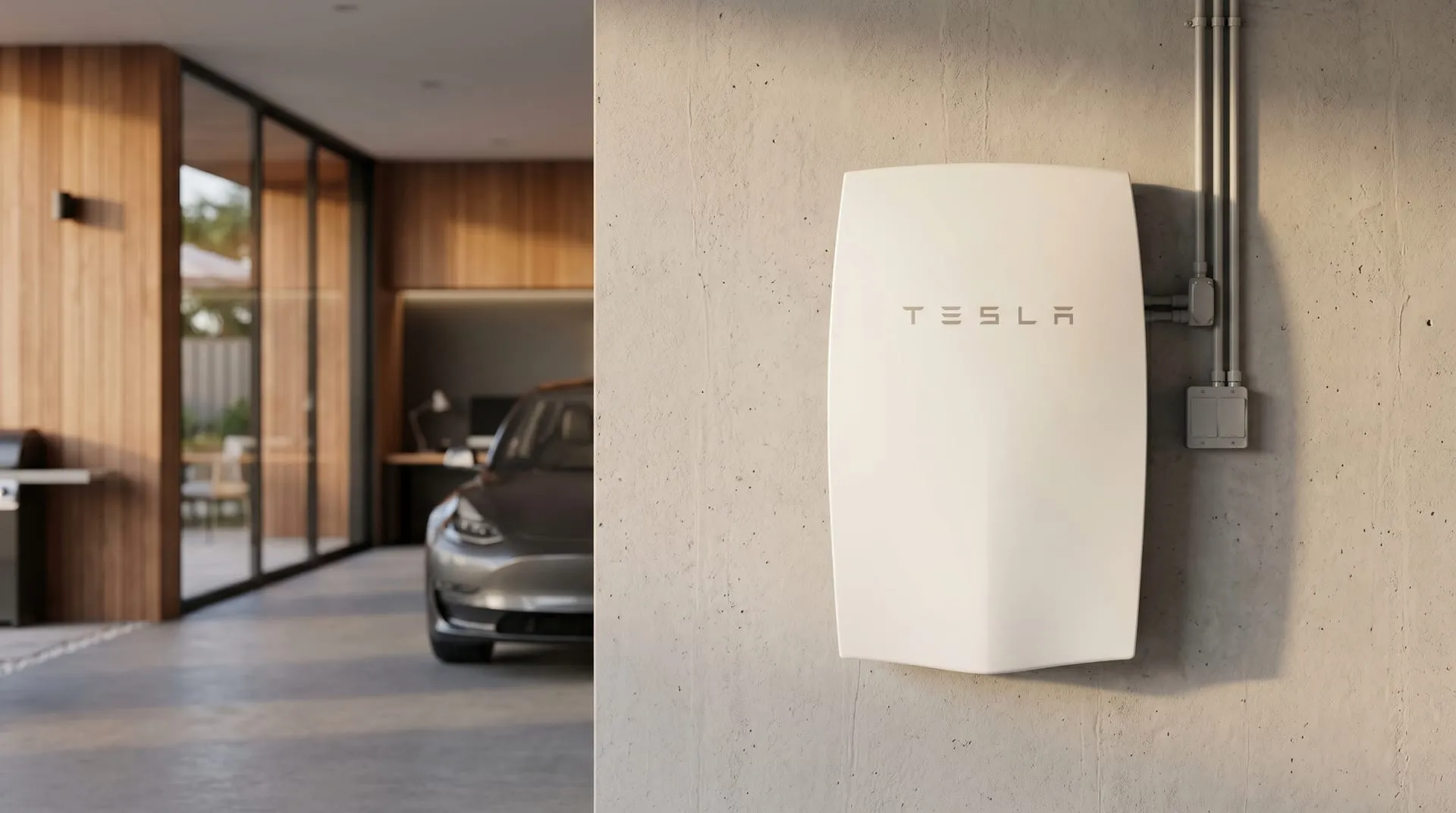
The Powerwall has earned its reputation for good reasons. It packs a generous amount of usable storage into a single sleek wall-mounted unit, includes integrated backup so your home can ride through blackouts, and its app is genuinely one of the easiest ways to see and control your home's energy in real time. For a lot of households, that combination of capacity, backup and simplicity in one well-supported product is exactly what they're after.
- Large usable capacity in one tidy unit — great for typical family homes
- Built-in blackout backup that switches over fast
- Excellent, easy-to-use monitoring app
- Strong 10-year warranty
- Can be stacked for homes that need more storage
- Widely supported, with a large installed base and proven track record
For a lot of Adelaide homes with solid solar and high evening usage, the Powerwall hits a sweet spot of capacity, backup and simplicity.
Capacity and backup
A single Powerwall offers enough usable storage to cover the evening and overnight needs of many family homes, and because it integrates backup, it can keep your home running during an outage without a separate piece of kit for most setups. You can configure essential-circuit or, with the right design, broader home backup, and you can stack multiple units for larger or all-electric homes that need more runtime. Paired with solar, it recharges during the day, which is what makes it genuinely useful through an extended blackout rather than just a brief one.
The app and energy monitoring
One of the Powerwall's standout features is its software. The app gives you a clear, real-time view of your solar generation, battery charge, home consumption and grid use, and lets you set preferences like prioritising backup reserve or self-consumption. This visibility isn't just a nice-to-have — being able to see your energy flows tends to help households use power more smartly, which improves the return on the whole system.
Who the Powerwall suits best
The Powerwall tends to be the right call for households that use a meaningful amount of power in the evening and overnight, already have (or are installing) solar that produces a good daytime surplus, and want whole-home-style backup with a single, well-supported product. If you value a polished app and a battery that 'just works', it's hard to beat. Larger and all-electric homes can stack units to scale up, which keeps it relevant well beyond the average household.
When another battery might be better
It isn't automatically the best fit for everyone. If you want to start smaller and expand in fine increments, a modular system like Enphase can be more flexible, since you can add capacity in smaller steps. If your usage is modest, a smaller battery may pay back faster and suit your needs at a lower upfront cost. And every home's switchboard, roof and budget are different — which is exactly why we size and recommend from your actual power data rather than defaulting to one brand. We're certified for the Powerwall, but we're not here to sell you one you don't need.
Powerwall and Virtual Power Plants
The Powerwall is compatible with various Virtual Power Plant programs, which can add ongoing value by letting your battery support the grid at peak times in exchange for credits or a better energy deal. Whether to join a VPP is a personal decision — some owners love the extra return, others prefer to keep full control of their stored energy — but it's worth knowing the option is there, and we can talk you through how it interacts with your savings.
Powerwall in South Australian conditions
SA's high power prices, low feed-in tariffs and occasional grid outages make a capable battery with backup especially worthwhile here — and the Powerwall is well suited to our conditions when it's correctly installed and configured. As with any battery, the quality of the install and local after-sales support matter as much as the badge on the unit. A Powerwall fitted by a certified local team, sized to your usage and integrated properly with your solar, will serve you far better than the same hardware installed carelessly.
Cost and payback
A Powerwall sits in the premium tier of home batteries, but its generous usable capacity means its cost per usable kilowatt-hour is competitive, and federal incentives can take a meaningful chunk off the upfront price. For a home with solid solar and high evening usage — exactly the profile that suits the Powerwall — payback typically lands in the same single-digit-year range as other quality batteries, after which you continue to benefit from years of stored energy under warranty. We'll model your real numbers so you can see the honest payback for your home.
How many Powerwalls do you need?
For many family homes, a single Powerwall provides enough usable storage to cover the evening and overnight load and keep essential circuits running through an outage. Larger homes, all-electric households, or those with a pool and an EV may benefit from stacking two or more units to extend runtime and support bigger loads — and the Powerwall is designed to scale this way. The right number comes down to your actual consumption after dark and how much of your home you want backed up. We work it out from your usage data rather than guessing, so you're not paying for a second unit you don't need or running short with one.
Powerwall vs Enphase: which suits you?
These are the two systems we're most often asked to compare, and both are excellent — they just suit different priorities. The Powerwall is an all-in-one unit with large capacity and integrated backup, ideal if you want maximum storage and a seamless, single-product solution with a brilliant app. Enphase takes a modular, AC-coupled approach with panel-level intelligence, which shines if you want to start smaller and expand in increments, or if your roof has shading that benefits from microinverters. For a typical family home wanting plenty of storage and simple whole-home-style backup, the Powerwall is often the natural fit; for households wanting flexibility and gradual expansion, Enphase can be the better match. We install both, so our recommendation comes from your needs, not a single product line.
Installation considerations
A Powerwall needs a suitable mounting location — it can be installed indoors or outdoors within its temperature range — and integration with your solar via the appropriate configuration. Homes with older switchboards may need an upgrade to support backup, and three-phase properties have particular requirements. Getting the backup wiring and gateway configuration right is what determines how seamlessly your home rides through an outage. As a certified installer, we handle all of this to standard and configure the system so it behaves exactly as you expect from day one.
Looking after your Powerwall
One of the Powerwall's strengths is how little it asks of you. There's no routine maintenance for the owner — it manages its own charging and discharging, and software updates arrive over the air. Your main job is simply to keep an eye on the app occasionally to confirm it's doing what you want, and to set your backup reserve to suit how much you value outage protection versus maximum self-consumption. If anything ever needs attention, a local certified installer can diagnose and support it, which is another reason to have it fitted by a team you can actually reach.
Setting your backup reserve
One simple but important setting is your backup reserve — the percentage of charge the Powerwall holds back in case of an outage. Set it high and you'll always have plenty of stored energy ready for a blackout, but you'll have less to cycle for everyday savings; set it low and you maximise daily savings but keep a smaller cushion for outages. The right balance depends on how much you value outage protection versus squeezing out every cent of bill savings, and you can adjust it any time in the app. We'll help you set a sensible starting point based on how often your area sees outages and what matters most to you.
Is now a good time to buy?
With high South Australian power prices, low feed-in tariffs and federal battery incentives available, the economics of a Powerwall are strong in 2026 — and every month you wait is a month of paying peak grid prices in the evening that stored solar could be covering. That doesn't mean rushing in without the right design; it means that for a home that's a good fit, there's rarely a compelling reason to delay. We'll give you an honest assessment of whether your home is ready to benefit now.
Our take
The Powerwall is an excellent battery and the right choice for many Adelaide homes — but 'the best battery' is always the one that fits your usage, your home and your budget. Thinking about a Tesla Powerwall? We'll tell you honestly whether it's the best fit, size it correctly, install it properly, and give you a free, fixed quote with every eligible rebate included. Get in touch today.
Get a free, honest quote
We'll model your real usage and show you the genuine savings before you spend a cent.