Quick answer
There is no single best solar battery — the right one depends on your usage, backup needs and budget. For most Adelaide homes the Tesla Powerwall and Enphase systems are top choices: both use safe lithium iron phosphate (LFP) chemistry, carry 10-year warranties and include blackout backup. The key things to compare are usable capacity, backup type, warranty, round-trip efficiency and the quality of the local installer.
Search for the best solar battery and you'll get a hundred different answers. The truth is there's no single best battery — there's the best battery for your home, your usage and your budget. This guide explains the criteria that actually matter, compares the technology and brands we trust, and helps you cut through the marketing so you can choose with confidence.
The things that actually matter
Before you compare brands, get clear on the criteria. These are the factors that genuinely determine whether a battery will serve you well for the next decade:
- Usable capacity (kWh) — enough to cover your evening and overnight use
- Backup capability — does it keep your home running in a blackout, and how much of it?
- Warranty and expected cycle life — 10 years is the benchmark
- Round-trip efficiency — how much energy you actually get back out
- Scalability — can you add more storage later?
- Battery chemistry and safety — modern LFP cells are a strong, safe choice
- Installer support — local service matters when something needs attention
Usable capacity vs nameplate capacity
One of the most misleading numbers in battery marketing is capacity. A battery's nameplate rating isn't always what you can actually use — many reserve a slice of capacity to protect cell life and to keep a backup buffer. When comparing batteries, always look at usable capacity, and match it to your real evening and overnight consumption. The goal is a battery that comfortably carries you from sunset to sunrise without either running flat or sitting half-empty.
Battery chemistry: why LFP matters
Most quality home batteries today use lithium iron phosphate (LFP) chemistry, and for good reason. LFP cells are known for their thermal stability and safety, long cycle life, and the ability to be charged and discharged daily for many years without significant degradation. When you're putting a battery on or near your home, that safety and longevity profile matters — and it's one of the reasons we favour LFP-based systems.
Brands we trust
As a Tesla Powerwall Certified Installer and Enphase Premier Installer, we work with proven, tier-one battery systems backed by strong warranties and local support. The Tesla Powerwall remains a favourite for its generous capacity, integrated backup and slick app — it's an excellent all-in-one choice for a typical family home. Enphase systems suit homes that want modular, expandable storage you can grow over time, with panel-level intelligence. Both are quality options; the right one depends on your needs rather than the badge.
| Tesla Powerwall | Enphase | |
|---|---|---|
| Design | All-in-one unit | Modular (AC-coupled) |
| Backup | Built-in | Available with added hardware |
| Expandable | Stack multiple units | Add capacity in small steps |
| Chemistry | Lithium iron phosphate (LFP) | Lithium iron phosphate (LFP) |
| Warranty | 10 years | 10 years |
| Best for | Maximum storage + simple whole-home backup | Starting smaller and expanding over time |
A premium battery with poor installation is a bad investment. Workmanship and after-sales support matter as much as the badge on the box.
Backup: whole-home vs essential circuits
If keeping the power on during a blackout matters to you, pay close attention to backup. Some batteries include backup as standard; others require an additional gateway or hardware. You'll also choose between essential-circuit backup — which keeps key circuits like the fridge, lights and power points running — and whole-home backup, which keeps everything going but costs more and needs more capacity. The best battery for you is partly defined by how much of your home you want to keep alive when the grid goes down.
Sizing it right
The most common mistake is buying the wrong size — too small and you're still drawing expensive grid power each night; too big and you've overspent on capacity you never use. We size your battery from your actual usage data, accounting for when you use power and the loads that matter most, not a rule of thumb. We also plan for the future: if an EV, electric hot water or a bigger household is on the horizon, the right battery today is one that can handle or grow into that demand.
Matching the battery to your home
A compact townhouse with modest evening use has very different needs to a large all-electric family home with a pool and an EV. For smaller homes, a single mid-size battery with essential-circuit backup is often perfect. For high-usage or all-electric homes, a larger or stacked system with whole-home backup makes more sense. For homes planning to expand their setup gradually, a modular system that grows in increments can be the smartest path. The 'best' battery is simply the one that fits your profile.
Red flags to avoid
Be wary of unknown brands with short warranties or no local support presence, quotes that lead with nameplate capacity you can't fully use, batteries with no clear backup story when you've asked for backup, and prices that seem too good to be true. The battery market has its share of products that won't be supported in five years' time. A strong warranty is only as good as the company standing behind it — and the installer who fitted it.
Single battery, stacked or modular?
Batteries broadly come in three shapes. An all-in-one unit like the Powerwall puts generous capacity and backup in a single product — simple and effective for a typical family home. A stacked system uses multiple units to reach higher capacity, ideal for large or all-electric homes that need more runtime. A modular system lets you start smaller and add capacity in increments over time, which suits households that want to spread the investment or expect their needs to grow. There's no universally 'best' format — the right one depends on how much storage you need now, how much you might need later, and your budget.
Warranty: what to read in the fine print
A 10-year warranty has become the benchmark, but not all warranties are equal. Look at the guaranteed retained capacity at the end of the term, the throughput or cycle limits, whether the warranty covers the whole system or just the cells, and — crucially — who actually honours it. A warranty is only as good as the company behind it; a generous-looking guarantee from a brand that may not exist in five years is worth little. We favour established manufacturers with a track record and a local support presence, so a claim is straightforward rather than a dead end.
Why installation quality makes or breaks a battery
The same battery can perform brilliantly or poorly depending on who installs it. Correct sizing, proper integration with your solar, well-configured backup, a tidy and compliant electrical install, and accurate commissioning all determine whether you get the full benefit of the hardware. Poor installation can leave a premium battery underperforming, void parts of the warranty, or create safety issues. This is why we always say the installer matters as much as the brand — a quality battery fitted by an accredited local team is a far better buy than the same unit installed carelessly by the cheapest operator.
Round-trip efficiency explained
Round-trip efficiency is the share of energy you get back out of a battery compared with what you put in — some is always lost as heat in the charge and discharge process. Quality home batteries typically sit around 90% or higher, meaning for every 10 units of solar you store, you get roughly 9 back. It might sound like a small detail, but over thousands of cycles it adds up, and it's one of the quiet markers of a well-engineered battery. When comparing models, a higher round-trip efficiency means more of your hard-won solar actually makes it to your evening lights and appliances.
Indoor or outdoor installation?
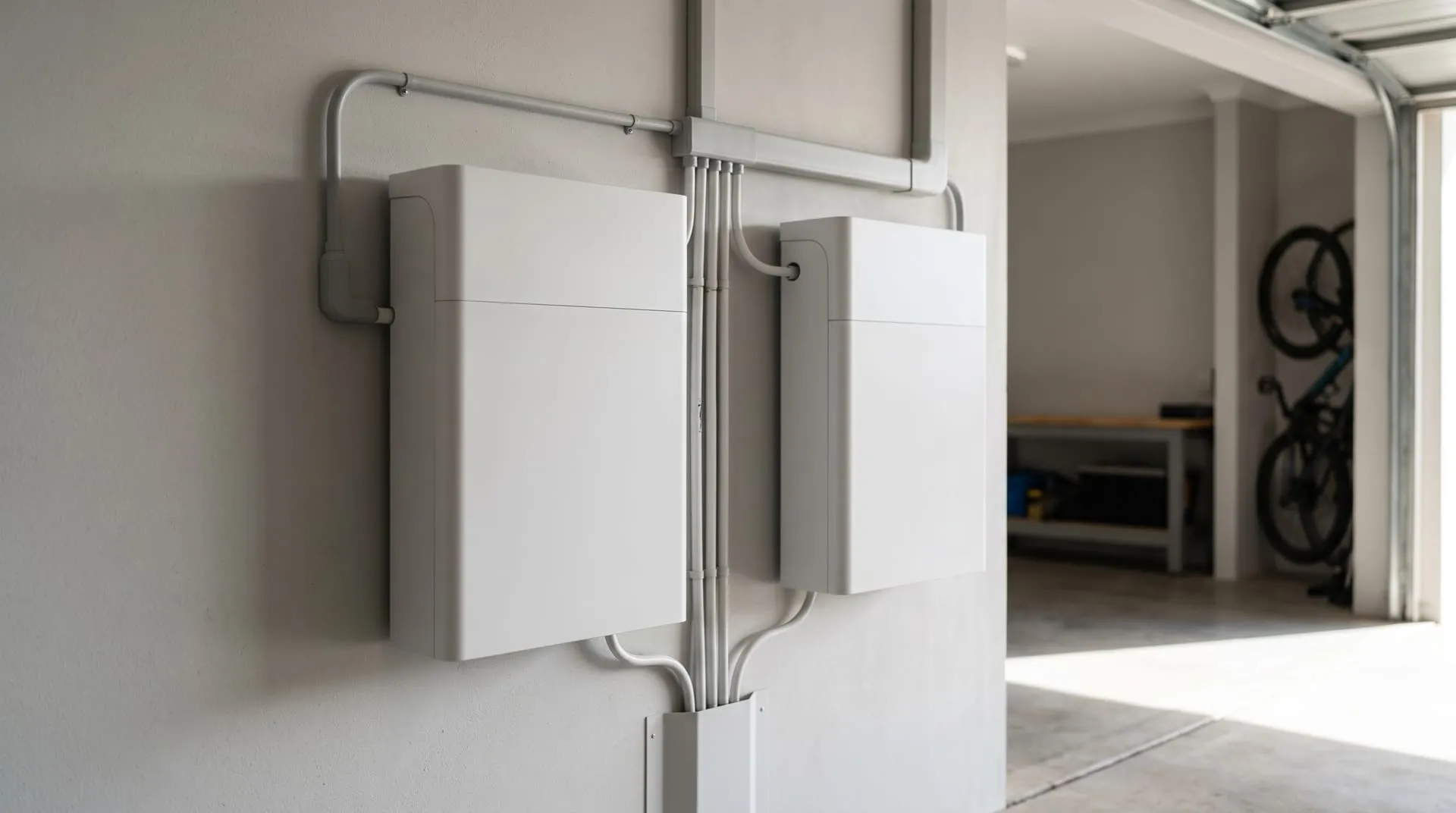
Where a battery can be installed affects both your options and its longevity. Most quality batteries are rated for outdoor installation within a temperature range, and many can also go in a garage or plant room. Extreme heat is the enemy of battery life, so on a hot Adelaide wall a shaded or sheltered position is preferable, and some homes are better suited to a cooler indoor location. We assess the best spot during the site visit, balancing temperature, cable runs, accessibility and how the unit looks on your home — because the right location helps your battery perform and last.
Future-proofing your choice
The best battery isn't just right for today — it's ready for tomorrow. If an electric vehicle, electric hot water or a growing household is on your horizon, factor that in now. That might mean choosing a system you can expand, sizing up slightly, or selecting a battery that integrates neatly with EV charging. Thinking a few years ahead avoids the frustration of outgrowing your storage soon after you install it, and it's a key part of the advice we give when recommending a system.
Our take
The best battery for your Adelaide home is the one that's correctly sized, properly installed by accredited local technicians, and backed by a warranty and a team you can actually reach. Tesla Powerwall and Enphase are both outstanding choices for the right home — the real skill is matching the technology to your needs and installing it well. Tell us about your home and we'll recommend the right system — no jargon, no pressure.
Get a free, honest quote
We'll model your real usage and show you the genuine savings before you spend a cent.