Quick answer
A standard grid-connected solar system shuts down in a blackout for safety, but a solar battery with backup keeps your home running. It automatically powers your essential circuits — or your whole home — from stored energy, switching over in a fraction of a second. Paired with solar, the battery recharges during the day, so it can keep you going through extended outages, not just a few hours.
South Australians know the grid can drop out — summer heatwaves, storms and the occasional statewide event. The 2016 statewide blackout is still fresh in many memories, and smaller, localised outages happen far more often than most people realise. A solar battery with backup means a blackout doesn't have to mean a dark, powerless home. Here's how battery backup actually works, what it can and can't run, and what to look for when you want your home to stay on.
Solar alone won't power you through a blackout
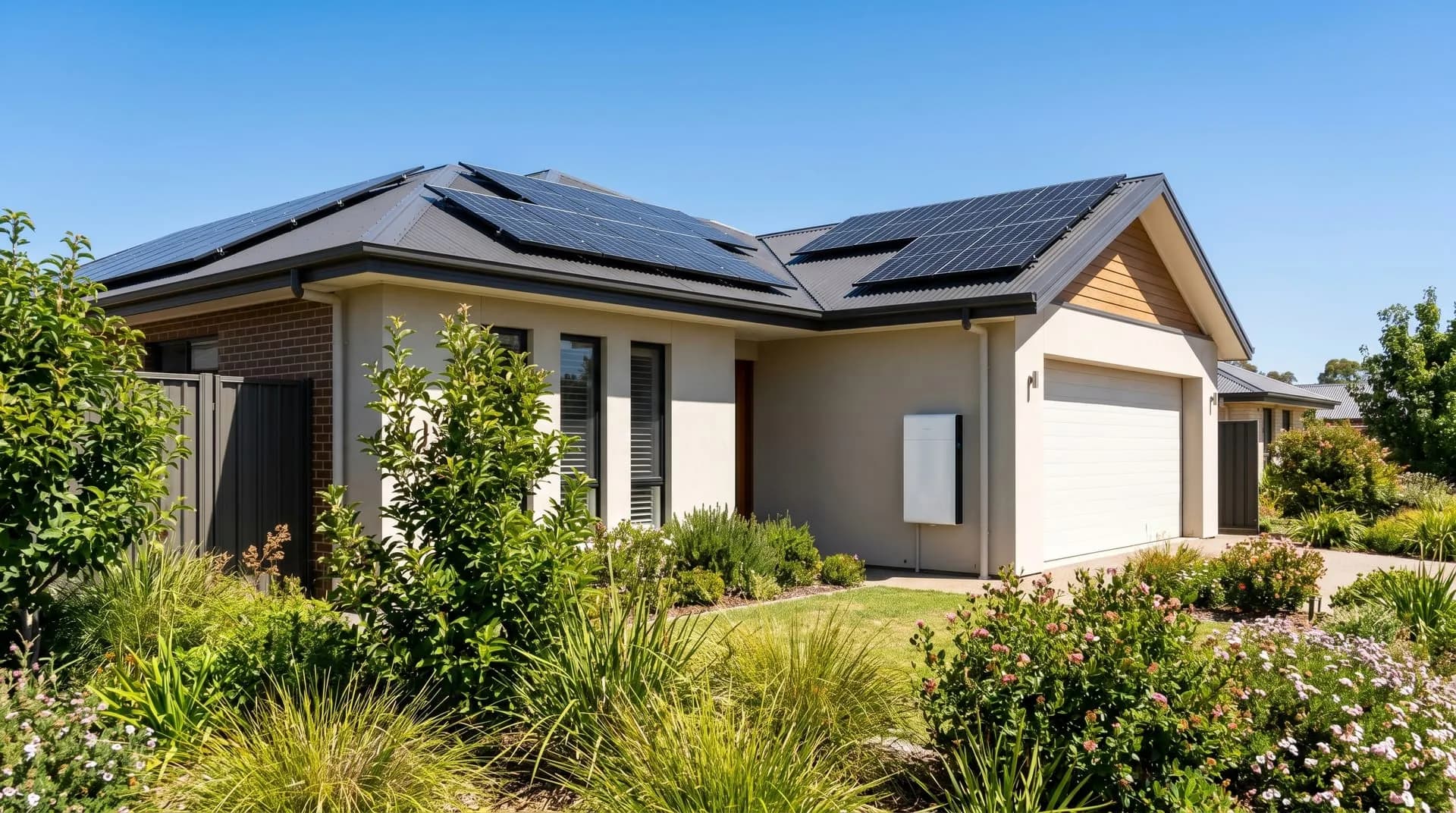
It surprises many people: a standard grid-connected solar system actually shuts down during a blackout for safety reasons. This is called anti-islanding — it stops your system feeding power into the grid while line workers might be repairing it. The practical result is that without a battery and backup capability, those rooftop panels can't keep your home running when the grid is down, even on a sunny day. A battery with backup changes that completely.
How battery backup works
When the grid drops, a battery with backup capability disconnects your home from the grid and continues powering your selected circuits from stored energy. Quality systems do this automatically and almost instantly — the changeover is often so fast you'll barely notice the grid has gone. Some systems use a dedicated backup gateway to manage this seamlessly; that hardware is part of what you're paying for when you specify backup, and it's worth getting right.
Whole-home vs essential-circuit backup
There are two main ways to set up backup, and choosing between them is one of the most important decisions you'll make:
- Essential-circuit backup — keeps your most important circuits running (fridge, lights, Wi-Fi, a few power points). Cost-effective and covers the basics.
- Whole-home backup — keeps your entire home energised, including larger loads. More capacity and a higher spend, but the most seamless experience.
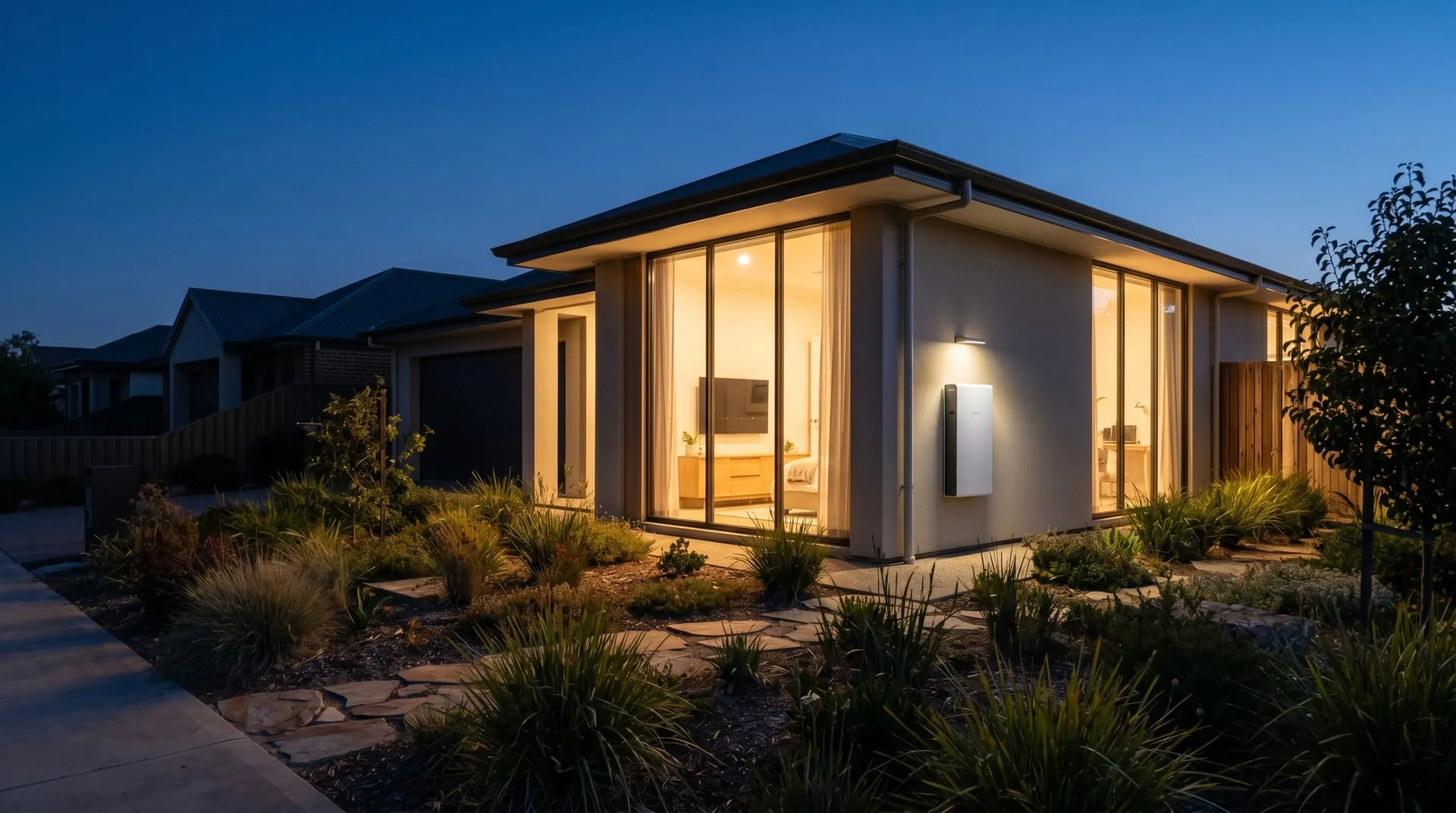
Many quality batteries switch over so fast you'll barely notice the grid has gone — the lights stay on and your home keeps running on stored solar.
What can backup actually run?
How much you can run during an outage depends on your battery's power output and capacity, and on which circuits you've put on backup. Low-draw essentials — fridge, freezer, lights, modem, phone chargers, a TV — are easy and can run for many hours. High-draw appliances like ducted air-conditioning, electric ovens, instantaneous hot water and EV charging draw a lot at once and can quickly flatten a battery, so they're often left off backup or used sparingly. Part of good design is deciding which loads truly need to keep running and sizing accordingly.
Recharging during an outage
Paired with solar, your battery can recharge from your panels during a daytime outage, so an extended blackout doesn't have to drain you to empty. This is the crucial advantage of solar-plus-storage over a battery alone or a petrol generator: during a multi-day outage, your home effectively becomes its own little energy island, topping up each day from the sun and carrying you through each night. That combination is what gives you genuine resilience, not just a few hours of runtime.
Sizing a system for reliable backup
If backup is a priority, it changes the design. You'll want enough usable capacity to cover your essential loads overnight, enough power output to actually start and run those loads, and a battery and inverter combination that supports the backup mode you want. For homes with critical needs, a larger or stacked battery provides more runtime and headroom. This is why it's so important to tell your installer up front that backup matters to you — it influences the battery, the inverter, the gateway and the wiring.
Who benefits most from backup?
Backup is valuable for almost everyone, but it's especially worthwhile if you work from home, run a home business, have medical equipment that must stay powered, live in an area with long rural feeder lines that see more outages, or simply can't stand losing a freezer full of food. For these households, the backup capability can be worth as much as the bill savings — it's insurance you actually get to use.
Why South Australia sees its share of outages
South Australia sits at the end of a long, lean grid, with a high share of renewables and exposure to extreme weather — all of which contributes to outages. Summer heatwaves push demand and stress on infrastructure; storms and high winds bring down lines; bushfire risk can force precautionary shutdowns; and the long rural feeder lines that serve outer and regional areas are simply more prone to faults. The 2016 statewide event was the dramatic example, but the everyday reality is localised outages that hit individual streets and suburbs far more often. Whatever the cause, a battery with backup means your home doesn't have to go dark when the network does.
Does backup work at night?
Yes — and this is where a battery proves its worth. If the grid drops in the evening or overnight, your battery powers your backed-up circuits straight from stored energy, no sun required. The charge you banked during the day carries your home through the night. Come morning, your solar starts replenishing the battery again. So unlike solar alone, which can only help during daylight, a battery with backup keeps you covered around the clock — which matters because outages have a habit of striking at the most inconvenient times.
Battery backup vs a petrol generator
Some households rely on a petrol or diesel generator for outages, but a battery with solar is a very different proposition. A generator needs fuel you have to store and replenish, it's noisy, it produces fumes so it can't run indoors, and it requires you to be home to start and manage it. A solar battery, by contrast, kicks in automatically the moment the grid drops — often before you've even noticed — runs silently, produces no emissions, and recharges itself from your panels each day at no ongoing cost. For everyday resilience, a battery is cleaner, quieter and genuinely hands-off in a way a generator never is.
Preparing your home for an outage
A little planning makes your backup work harder. A few sensible steps:
- Decide which circuits truly need to stay on, and have them wired to backup
- Keep your battery's backup reserve set so there's always some charge held for outages
- Know which high-draw appliances to avoid running during an outage to preserve charge
- Keep torches and phone power banks as a simple secondary backstop
- If you have medical equipment, make sure it's on a backed-up circuit and you understand its runtime
Backup for medical and critical needs
For households with medical equipment — CPAP machines, oxygen concentrators, medication that must stay refrigerated — reliable power isn't a convenience, it's essential. A battery with backup provides peace of mind that these devices keep running through an outage, and paired with solar it can sustain them across an extended event by recharging each day. If this applies to your home, it's vital to tell your installer so the system is designed with enough capacity and the right circuits backed up, and so you understand exactly how long your critical loads can run. We take particular care with these designs.
How long will backup last?
Runtime depends on how much usable energy is in your battery and how much power your backed-up circuits draw. Essentials like a fridge, lights, modem and a few devices draw relatively little, so a typical mid-size battery can run them for many hours — often overnight. Add high-draw appliances and the battery depletes far faster. The real game-changer is solar: during a daytime outage your panels recharge the battery, so rather than a fixed number of hours, your home can keep cycling through day after day for as long as the sun keeps shining. That's the difference between a stopgap and genuine resilience.
The peace of mind factor
Beyond the practical runtime and circuits, there's something harder to put a dollar figure on: not having to think about outages at all. With a battery quietly handling blackouts in the background, a power cut becomes a non-event — you might only notice because a neighbour mentions it. For families with young children, people working from home, anyone with food in the freezer or medical needs, and households simply tired of fumbling for torches, that quiet reliability is often the reason they go ahead. It's insurance you actually get to use, and use comfortably.
What to look for
If backup is a priority, tell your installer up front — it affects the battery, inverter and wiring you need, and not every battery or configuration delivers the same backup experience. Ask about changeover speed, which circuits will be covered, whether it recharges from solar during an outage, and how much of your home it will realistically keep running. We design backup around what matters most to your household, whether that's keeping the medical fridge cold or running the whole house. Ask us about blackout-proofing your home.
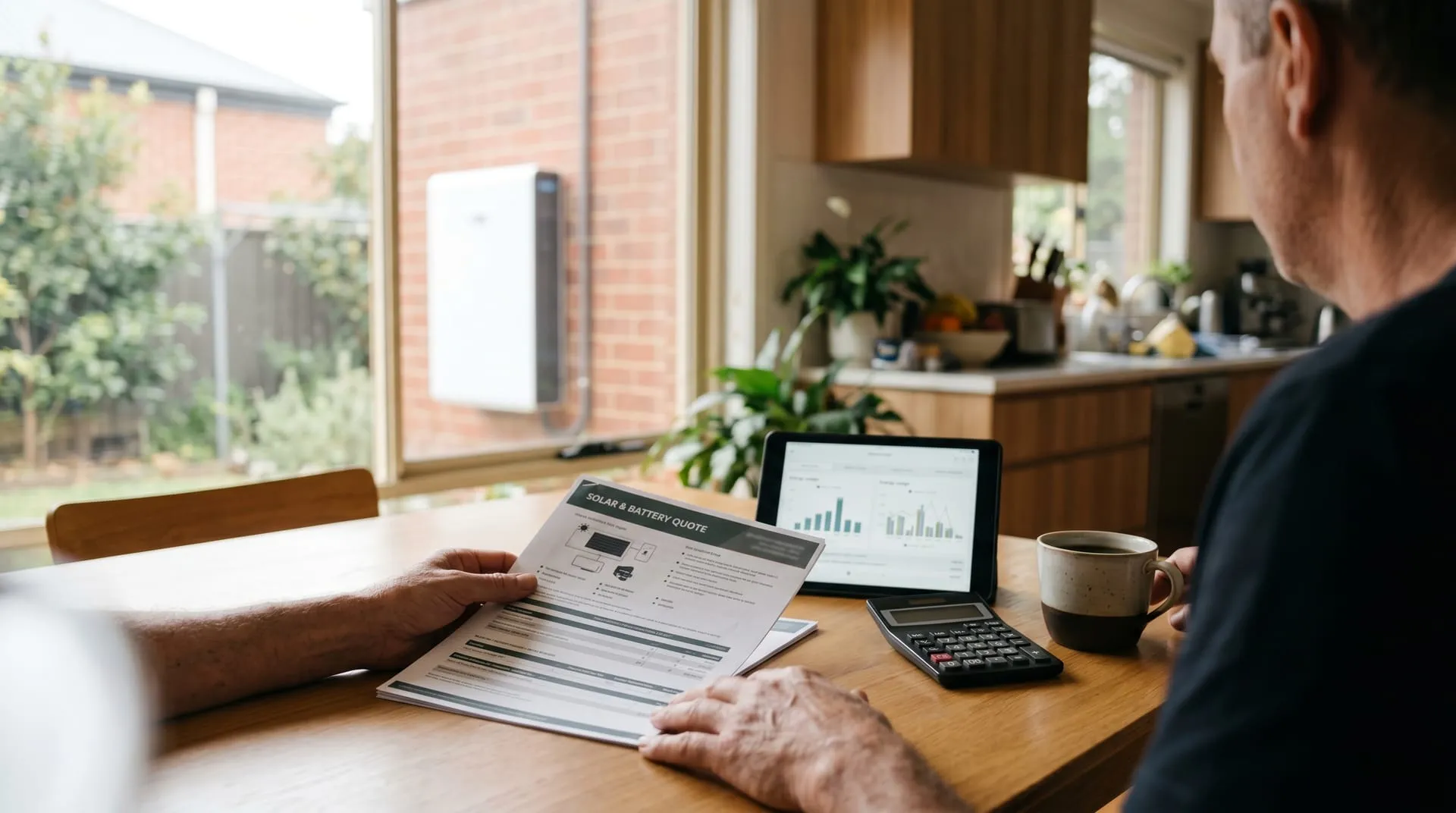
Get a free, honest quote
We'll model your real usage and show you the genuine savings before you spend a cent.