
Quick answer
To cut your power bill with solar in Adelaide: use big appliances during the day to self-consume your solar, add a battery to cover the expensive evening peak, choose a time-of-use tariff suited to a solar home, and shift loads like electric hot water and EV charging to daylight hours. Combined, these steps can take some Adelaide homes close to a zero power bill.
Power bills in South Australia aren't getting any smaller. The good news is that solar — especially paired with a battery and a few smart habits — can dramatically cut what you pay. But there's a big difference between a solar system that quietly trims your bill and one that slashes it. This guide covers the practical strategies Adelaide homes use to get the biggest savings, in roughly the order of impact.
1. Use more of your own solar
Every unit of solar you use yourself is worth far more than a unit you export, because exported solar now earns only a few cents while imported grid power costs many times that. Running big appliances — dishwasher, washing machine, pool pump — during the day while your panels are producing is the simplest way to lift your savings without spending a cent more. This is called self-consumption, and it's the single most effective free lever you have once your panels are on the roof.
A few easy habits make a real difference: put the dishwasher and washing machine on during daylight hours, run the pool pump in the middle of the day, and pre-cool or pre-heat the house with the air conditioner while the sun is up so you coast through the evening. Timers and smart plugs make this effortless once they're set up.
2. Store the surplus with a battery
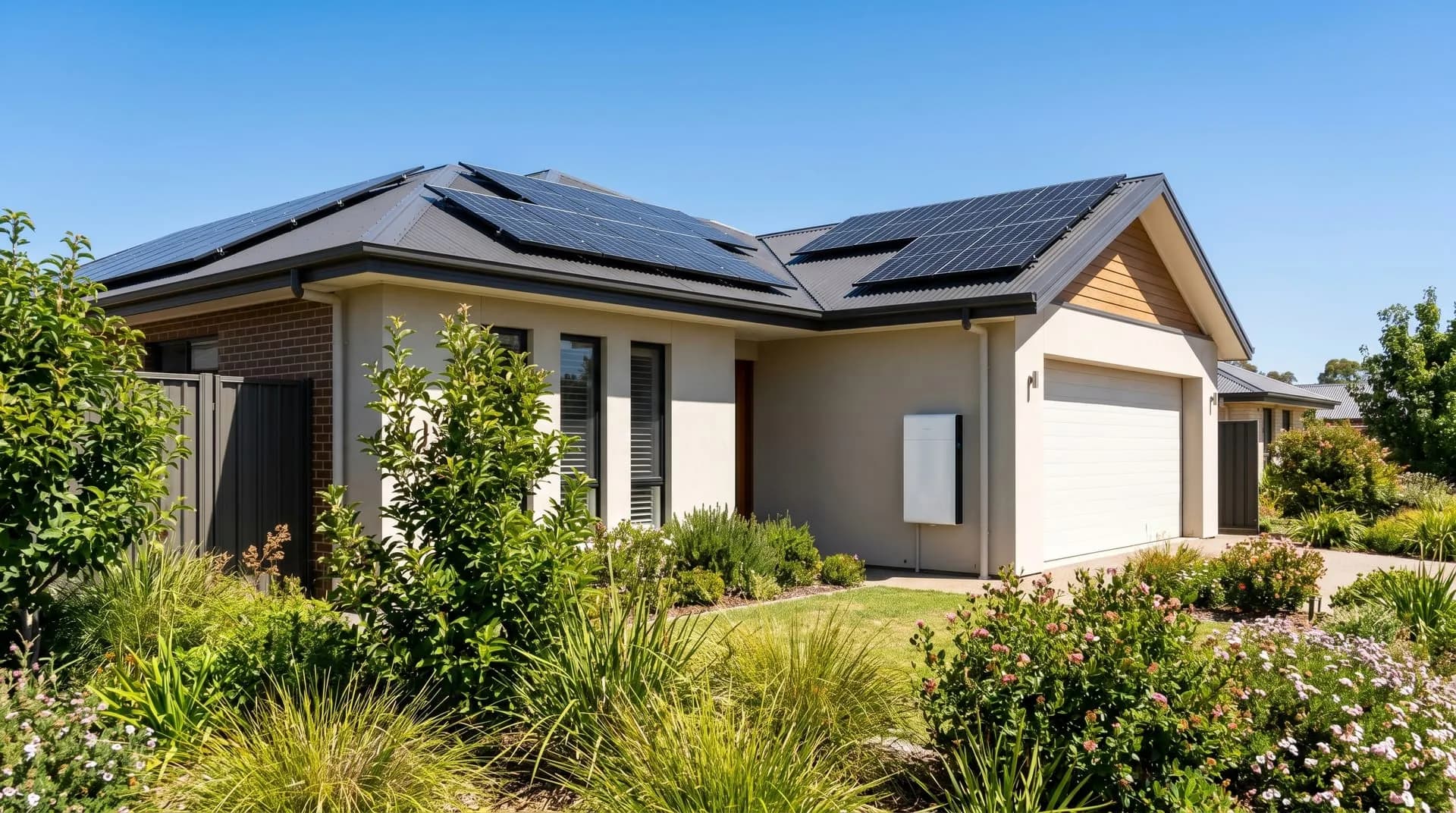
Most homes use the bulk of their power in the evening, long after the sun's gone down. A home battery captures your daytime surplus and powers your home at night, so you buy far less expensive grid electricity. With today's low feed-in tariffs, storing your solar beats exporting it by a wide margin. For many Adelaide homes, adding a battery is the step that takes them from a modest saving to the lowest possible bill — and in some cases close to no bill at all.
Self-consumption plus storage is the one-two punch that turns a good solar bill into a great one.
3. Understand your tariff
How you're charged matters as much as how much you use. Many SA households are on time-of-use tariffs, where electricity is most expensive in the evening peak and cheaper during the day and overnight. Solar and a battery are tailor-made for this: you generate and store cheap daytime energy, then use it during the expensive peak instead of buying it. It's worth reviewing your retailer plan once you have solar and storage, because the best plan for a solar home is often different to the one you were on before.
4. Right-size your system
A system that's too small leaves savings on the table; one that's too big wastes money on capacity you never use. The sweet spot comes from designing around your actual usage profile.
- Too small and you still lean on the grid; too big and you waste money on unused capacity
- Size to your actual usage profile, not a generic recommendation
- Factor in future loads — an EV or electric hot water changes the maths
- Match your battery to your evening and overnight consumption
5. Electrify and shift your loads
Moving from gas to efficient electric appliances, heating water with a solar-timed electric system, and charging an EV from your own panels all push more of your energy use onto cheap, self-generated power. Electric hot water on a daytime timer is one of the most overlooked wins — it's effectively a second 'battery' that stores energy as hot water. Combined with a real battery, this kind of electrification — best delivered as a complete solar and battery package — is how some Adelaide homes get close to a zero power bill.
6. Monitor and adjust
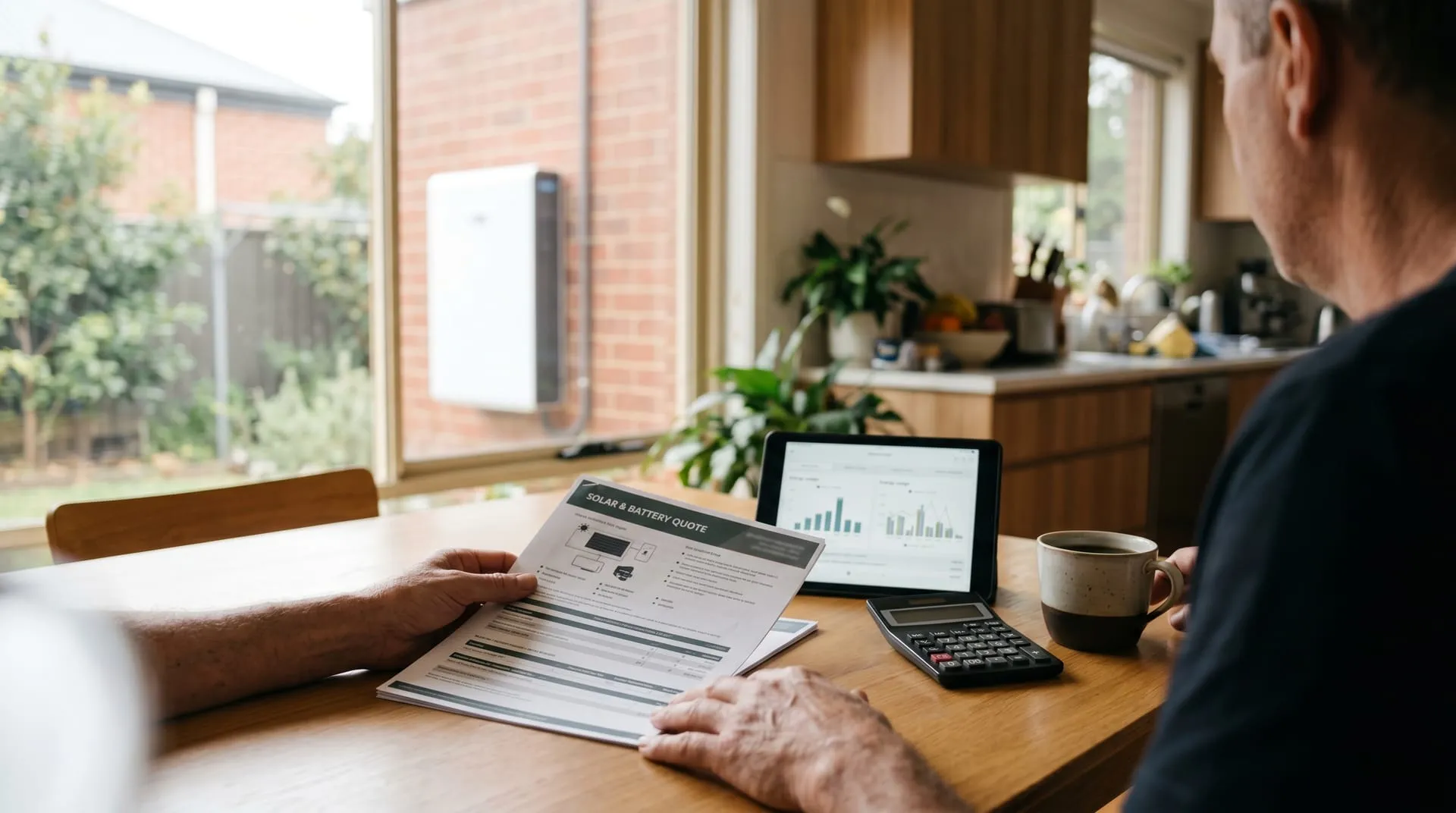
You can't manage what you can't see. A good monitoring app shows you exactly when you're generating, storing, using and importing power — and that visibility alone tends to change behaviour. Many households spot easy wins once they can see their usage: an appliance running at the wrong time, a load that could shift to daylight, or a battery that's regularly running flat and signalling it's worth a top-up in capacity. We set up monitoring on every system so you can keep optimising.
What savings can you actually expect?
Savings vary with your usage, your system size and your tariff, but the pattern is consistent: solar alone meaningfully cuts your daytime grid use, and adding a battery plus smart habits attacks the expensive evening peak that solar alone can't reach. Homes that combine a well-sized system, self-consumption, the right tariff and electrification routinely cut their bills by a large margin — and the savings compound year after year as power prices rise.
7. Tackle standby and phantom loads
It's not all about generation — what you waste matters too. The average home leaks a surprising amount of power to standby and 'phantom' loads: devices left on standby, chargers left plugged in, a second fridge or beer fridge running in the garage, and entertainment units drawing power around the clock. Individually they're small, but together they can account for a meaningful slice of your bill, much of it overnight when you're running on grid power or battery. Switching off what you're not using, putting entertainment units on a switchable power board, and questioning whether that second fridge earns its keep are free wins that stack on top of your solar savings.
8. Charge an EV from your own sunshine
If you drive an electric vehicle — or plan to — it can be one of the biggest levers of all. Charging an EV from the grid in the evening adds a large, expensive load at the worst possible time. Charging it from your own solar during the day, or from a battery in the evening, turns your driving into some of the cheapest energy you'll ever use. With the right setup, your solar can effectively fuel your car for a fraction of the cost of petrol, and a properly sized system accounts for that extra demand so your home and your car are both running on sunshine.
9. Heat and cool smarter
Heating and cooling are typically the largest single energy use in an Adelaide home, and they're easy to run on solar with a little timing. Pre-cool the house in the afternoon while the sun is up so you coast comfortably into the evening, and do the same with heating on winter days. Efficient reverse-cycle systems, sensible thermostat settings and good use of curtains and insulation all reduce the load. Combined with solar and a battery, smart climate control is often where the biggest real-world savings come from.
10. Time your hot water to the sun
Electric hot water is one of the biggest loads in many homes, and traditionally it's heated overnight or whenever the thermostat calls for it. Shift that heating to the middle of the day — with a timer or a smart controller — and you heat your water using free solar instead of grid power. Because a hot water tank stores that energy as heat for use later, it acts like a second battery: you're banking your solar in the form of hot showers. It's one of the cheapest and most overlooked ways to lift your self-consumption.
11. Seal and insulate your home
The cheapest kilowatt-hour is the one you never need. Good insulation, sealed gaps around doors and windows, and sensible use of curtains and external shading dramatically reduce how hard your heating and cooling have to work — which is where most household energy goes. These improvements cost little and pay back year after year, and they make your solar and battery stretch further because there's simply less demand to cover. Energy efficiency and solar work hand in hand: reduce the load first, then generate and store to cover what's left.
Get a system review if you already have solar
If you've had solar for a few years, it's worth a check-up. Panels can underperform if they're dirty or if a fault has gone unnoticed, your usage may have changed, and your retailer plan might no longer be the best fit for a solar home. A review can uncover savings you're currently missing — a battery to capture your wasted export, a tariff switch, or simply a clean and a health check to restore lost generation. Sometimes the cheapest way to cut your bill further is to get more from the system you already own before adding anything new.
The compounding effect of rising prices
Here's the part that's easy to overlook: every saving you lock in today grows as electricity prices rise. A system that saves you a certain amount this year saves you more next year and more the year after, because the grid power you're avoiding keeps getting more expensive. That's why solar and storage behave less like an expense and more like an investment that hedges you against future price hikes — the longer you have it, the better it looks.
Want to see how low your bill could go? We'll model your usage and design a solar and battery system to match, then show you an honest, numbers-based estimate of your savings. Request a free, no-obligation quote today.
Get a free, honest quote
We'll model your real usage and show you the genuine savings before you spend a cent.